Category: Reviews

Frostgrave: Advanced Spellcraft Review

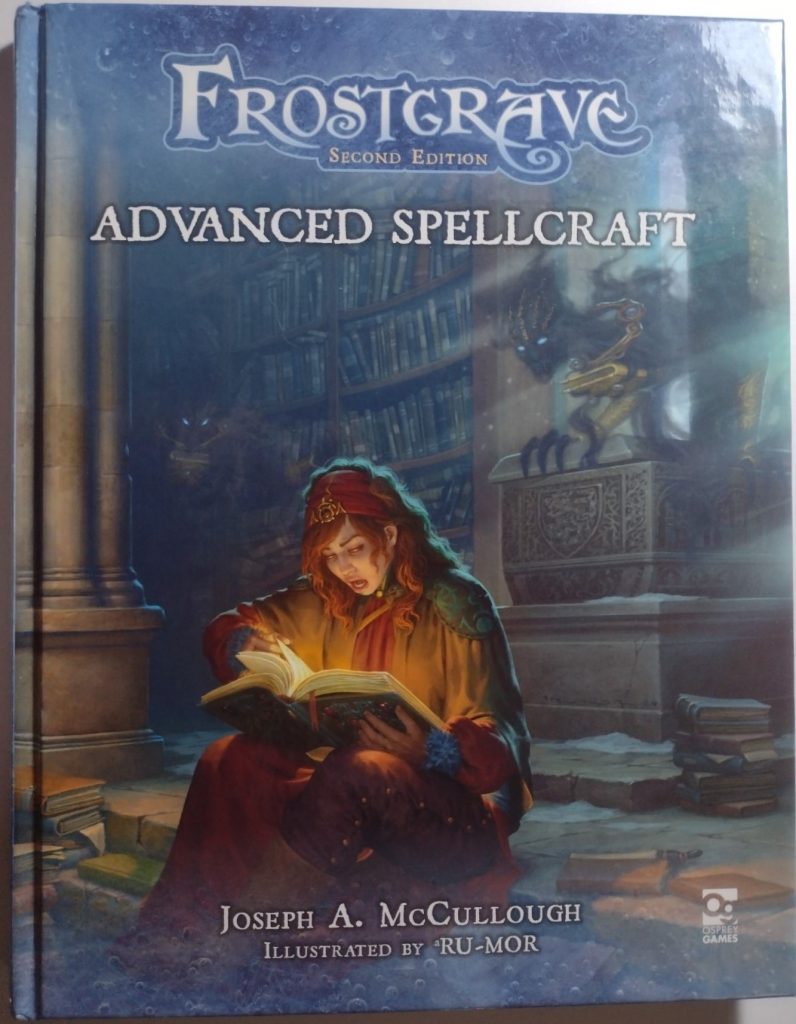
Marking and celebrating the 10th year of Frostgrave comes Advanced Spellcraft by Joseph Mc Cullough and published by Osprey. It is the largest of the Frostgrave supplements so far and apart from Frostgrave: Wizard Eye: The Art of Frostgrave the only one in hardback. 

The look of the book

Like its predecessors Advanced Spellcraft is beautifully presented with a cover depicting a mage studying a magical tome with a look of surprise or perhaps building terror on her face while unbeknownst to her two whispy Book Wights approach from behind. Inside the text is liberally adorned with great photos by Kevin Dalimore, of miniatures painted by him and Paul Cubbin, and stunning artwork by aRu-Mor. The painting on page 27 is one of my favorites and is wonderfully creepy.

What’s inside?  

The book opens with an introduction from Joseph. I always enjoy reading these because I always get the feeling that Joseph is as excited about playing his games as he is writing his books, so you know you are in good hands.

The book is themed around the rediscovered Bibliosepulchre of Felstad. This vast library-crypt was the resting place of ancient librarians who were entombed, each holding tightly to a rare grimoire.  Chapter One details a range of eight optional spellcasting rules that you can add to your game. My favourites are the Casting Roll Criticals and Flourishes. 

As the name suggests Casting Roll Criticals add an enhancement on a casting roll of twenty, a critical success or a detrimental effect on a roll of one, a critical failure.

The Flourishes are used for when a Wizard finds or purchases a grimoire of a spell that they already know, they can then use it to learn to cast the spell with an optional flourish, to achieve different effects albeit with a harder casting roll. These are a great addition to the game adding further depth and variety to the spells.

Chapter Two is the Codified Spell List.  All the spells from the Frostgrave rule book are covered with Critical Success and Critical Failure effects and apart from one spell, two or more flourish effects.  Additionally there are notes or FAQs for many of the spells listed. 

Next is The Bibliosepulchre Campaign that consists of ten scenarios written for two players and recommended for experienced wizards as they are ‘extremely dangerous and include deadly monsters’, to quote the book, so will be suitably challenging if you have been playing Frostgrave for the last 10 years. The scenarios are playable in order but there is also a table for rolling for them randomly.  Each scenario takes place in a section dedicated to one of the schools of magic from the Frostgrave rulebook. A nice touch is that the scenarios can be played with your normal Frostgrave terrain as the Bibliosepulchre reflects the city and also many areas would be collapsed ruins.  Ideally though you might want to make some book shelves, lecterns and other accoutrements found in libraries.   I will admit to not having read through all the scenarios, mainly because I like to read them in sequence of playing them, if you get what I mean, and I haven’t had the time yet. 

Chapter Four details thirty nine new treasure items that can be found in the Bibliosepulchre. After each scenario one treasure token can be exchanged for a roll on the Bibliosepulchre Treasure Table.  There is a huge range of magical items detailed here and a note is made that due to their rarity none of them should be available to purchase which will keep them as a great incentive to play the scenarios. 

The final chapter details fourteen new creatures that may be encountered within the Advanced Spellcraft scenarios.  There is of course a random encounter table and details of new creature traits not found in the main rulebook.

Conclusion

I have to say that Advanced Spellcraft is a really great supplement for Frostgrave and adds so much to the games.  I haven’t gone into page by page detail in this review, partly to keep the review to a reasonable length, and partly as doing so would feel a little like giving out spoilers.  If you enjoy Frostgrave, go and buy the book or the PDF, I don’t think you will be dissapointed! I’m giving Advanced Spellcraft a d20 in the miniature battles rating scheme.
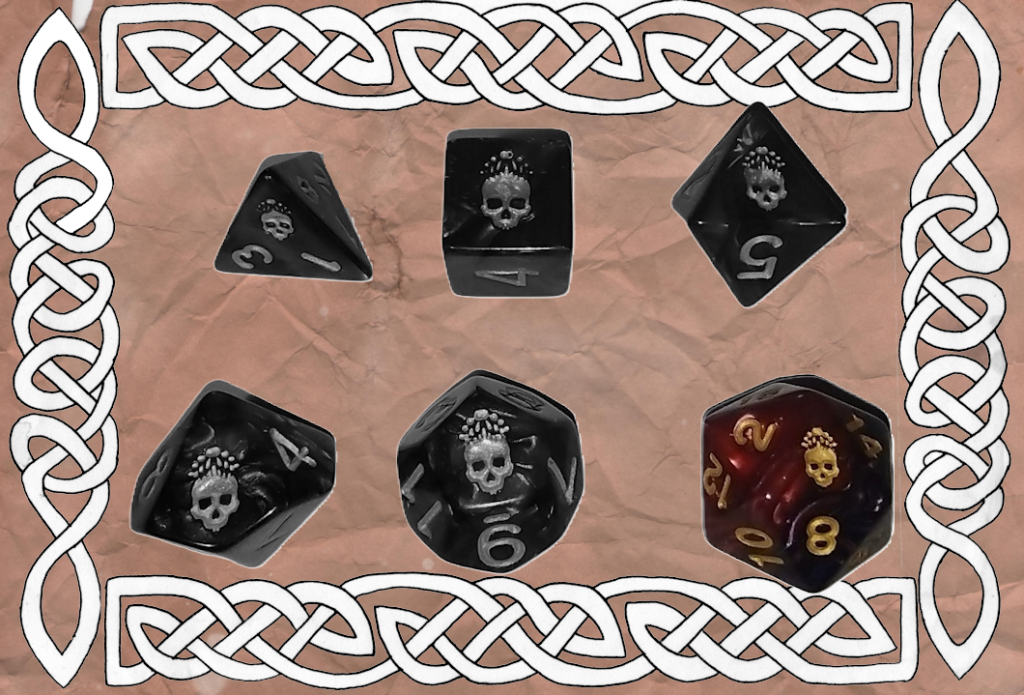
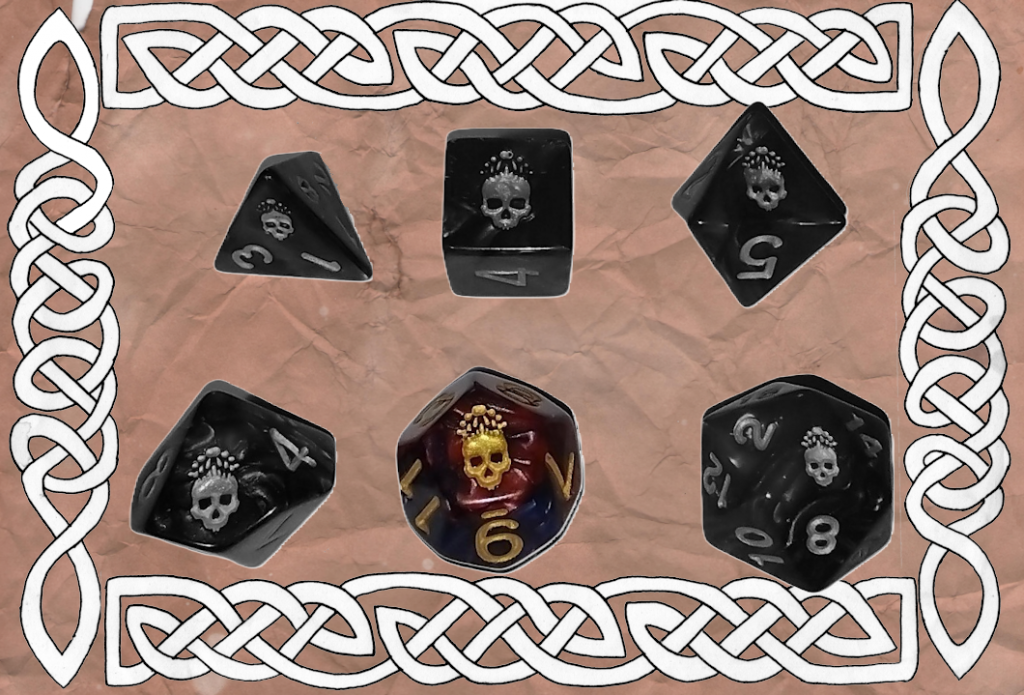
A set of polyhedral dice in grey scale with d20 in colour.

The Silver Bayonet Review

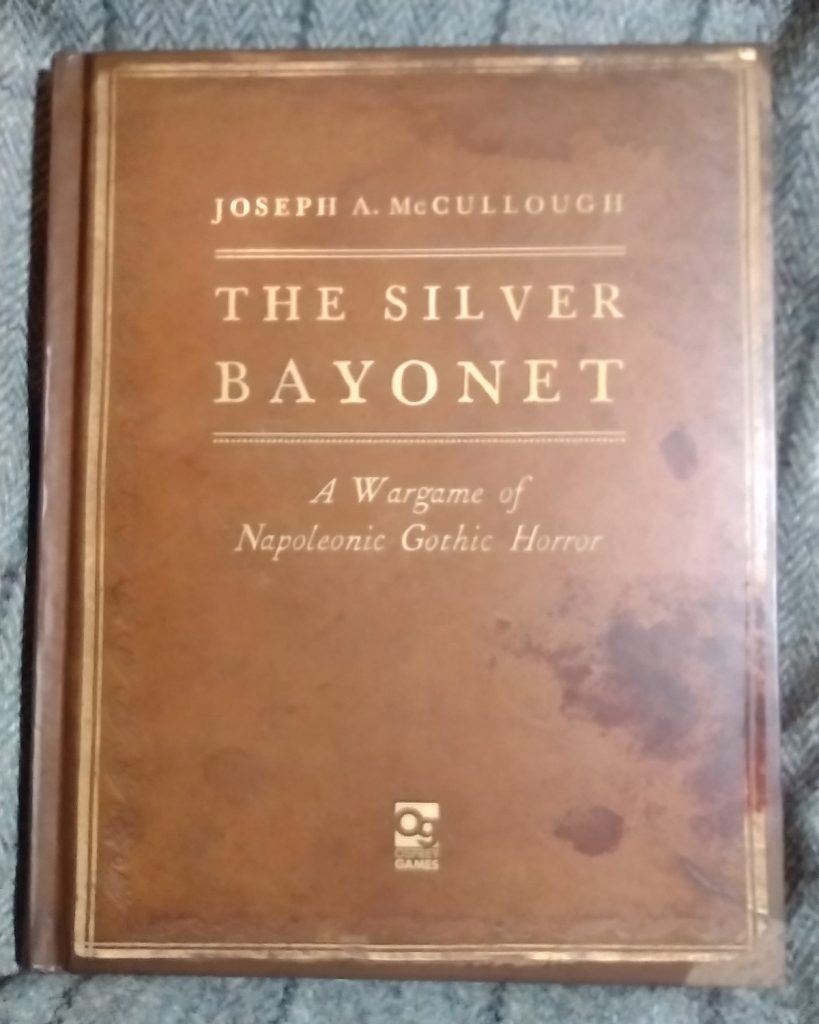
The Silver Bayonet Rule book front cover

While looking at Frostgrave supplements on the Osprey Publishing site I began looking at another game by Joseph McCullough, ‘The Silver Bayonet‘. I’d seen it mentioned here and there but never really looked at what it was about. After reading the description, and realising that this was a great excuse to paint some military miniatures from the Napoleonic period, I grabbed a copy as soon as I was able.

I’ve always liked the idea of having a big army of miniatures from the Napoleonic era but have always held off because it would require spending a lot of money that is already earmarked for fantasy and sci-fi gaming and I probably would never get round to actually having any battles. So, The Silver Bayonet is perfect for going someway to scratching an itch. You don’t need a large amount of miniatures, the rulebooks and supplements are very reasonably priced and, the rules are fairly straightforward.

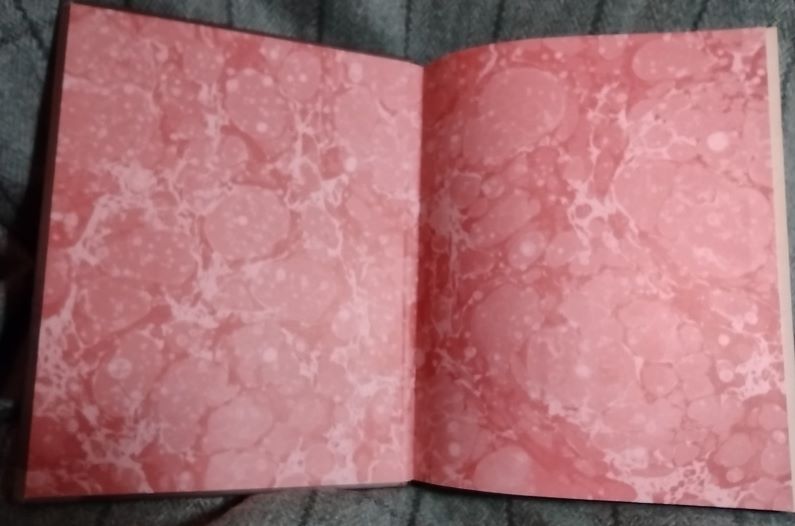
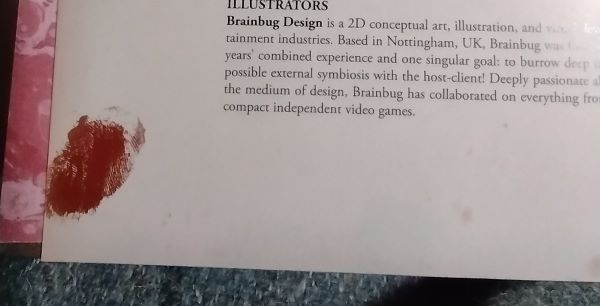
The rule book is very well presented and has been styled to look like an old hardback book with stains and damage. This is carried through the whole book with the ‘marbled’ style end papers and there are odd stains on some pages like the bloody finger print pictured below.

Napoleonic Gothic Horror

The Silver Bayonet is a skirmish wargame set in an alternative history where during the Napoleonic wars, fuelled by the deaths on the battle field, entities known as the Harvestmen began to cast their influence on the world, using their powers to release a horde of supernatural creatures previously thought of as myth or legend.

Britain is the first nation to respond to the threat forming units of special troops to hunt down and destroy these supernatural foes, awarding success with The Silver Bayonet. Other nations soon form their own special units.

The game oozes a swashbuckling vibe sort of like a ‘boys own‘ story produced by Hammer Horror. It can be ‘Sharpe’s Vampire’ or ‘Hornblower and the island of zombies’ or anything your imagination can conjure up for the Napoleonic era.

Specialist Units

The focus of play are the specialist units. These are formed by first choosing a country, Britain, France, Prussia, Spain, Russia and Austria, in the core rule book but there are options for other countries in the source books. Different soldiers are only available to some countries – the Highlander, for example being only available to Britain, but there is an optional rule to make up your unit with whatever soldiers you like.

The book also suggests that if you want to play a nation not on the list there is no reason not to. Simply grab some minis and choose one of the countries that fits. As with all optional rules, its good manners to make sure your opponents are happy with your choice.

What you need to Play

You will need up to 8 miniatures to represent your unit, one officer and up to seven soldiers. Plus some terrain, miniatures to represent the monsters, pencil and paper, a unit sheet – photo copied from the rule book or downloaded from the Osprey site and some d10s ideally in three different colours. The game is miniatures agnostic so you can use any miniatures you like. There is a great range of ‘official’ Silver Bayonet figures by North Star Military Figures. I have to confess I got badly bitten by the miniatures for The Silver Bayonet bug and now have three units (which will feature in future blog posts) and also have my eye on the North Star Russian Unit but am holding off for a bit as my pile of shame/possibilities needs reducing (and I just got my hands on a copy of Kill Team Hive Storm).

First you create a commanding officer who will lead the unit. There are some choices of increases to various starting stats so you can customise your officer a little. Further customisation involves the choosing two attributes. Attributes is a catch all term for skills, innate talents and special abilities in the game.

Next the officer needs to be equipped with a number of equipment slots to fill from two lists of equipment, a general list for standard weaponry with some items taking up more than one equipment slot, and a special list, items like silvered weapons and holy symbols, useful for fighting supernatural entities. A maximum of two items are allowed from this list though some of them are modifications to weapons and so don’t take up an actual equipment slot. Both are kept fairly small to keep things simple. A one handed sword or axe or club are all covered by the Hand Weapon, for example.

Next a company of up to 7 soldiers is chosen from a list of various specialists in keeping with the troop types during the Napoleonic era and. As well as military persons the lists there are also civilians whose skills make them useful to a Silver Bayonet unit. There is also the option of disregarding the country restriction and just choosing your soldiers as you wish. As is the case with much of Joseph’s game design the rules of fun and cool override those in the rulebook. Although it would be polite to check your opponent is okay with this in a competitive game.

The Game

The rules are similar to the Frostgrave rules, a point I am in agreement with Mr Peachy about, if it ain’t broken, don’t fix it, but there are some differences, the main one being is Silver Bayonet uses d10s rather than d20’s as mentioned earlier. These come in three varieties, and is why it helps to have three different colours, some of which you keep in a pool to be used to affect rolls.

Turns are split into phases each of which is either your minis or your opponents (in the two player competitive version) and a phase for any monsters. Solo and co-operative play have slightly different phases but are essentially the same. A figure generally has two actions in their phase one of which can be move and the other shooting, melee attack, investigating, or other actions. A lot of the game depends on the scenario that you are playing and there are both competitive and solo/co-operative scenarios included in the book as wells a guidelines for creating your own.

Campaign Play

You can play the game as just a one off scenario or skirmish but I think where it shines is with campaign play. Campaign rules are included and guide you through the advancement of your unit as it gains experience.

Another Review

This is a fairly short review and doesn’t cover everything but Peachy over on Peachy Tips has done a nice The Silver Bayonet review and an excellent kitbash idea for making some zombies (round about the 23:49 mark) which is well worth watching. I also had a go at kitbashing a zombie for the game.

The Silver Bayonet Supplemental Rules and Settings

At the time of writing there are four supplements available for The Silver Bayonet, The Carpathians – Castle Fier, Canada, Egypt and Italy. Each adds new monsters and troop types as well as scenarios to play. It has also just been announced that the next supplement will be ‘Britain: Bones of Albion’.

Minature Battles Score

My one very small criticism of the rule book is the lack of photos of miniatures on the table. However, I can see that this may have been a design decision, photos possibly not fitting with the design aesthetic of the book, which is very well done – I particularly like the cover being styled to look like an old, stained book. So it is a really really small criticism. I would have liked to have seen some photos of miniatures, possibly in a gallery as an appendix after the main content, there is after-all a photo on the last page.

It is a very small criticism though. This game, like Frostgrave, has been a breath of fresh air and gets my imagination sparking away like a, well, a very sparky thing!

I’m giving it a d12, only because of the lack of inspirational photos. I’m trying to be fairly strict with my reviews otherwise the majority will score d20s!

Have you played The Silver Bayonet or are you intending to? What nation did you choose? Let me know if the comments!

All alone in Felstad Part 1.5 – Frostgrave 2nd Edition Review

(I probably should have written  this before my previous post, but better late than never.)

Frostgrave is a mini agnostic skirmish wargame set in the frozen ruins of the city of Felstad by Joseph A. McCullough. Felstad was once a great city in a magic empire, its inhabitants producing objects of wondrous magic. But, the city was doomed by the actions of a wizard who lost control of some working and a great storm was unleashed  shrouding the city in a cataclysmic blizzard that left behind only a frozen wasteland. The empire failed and its magic also.

After many centuries Felstad was almost forgotten but as the magical winter began to abate, those who remembered the tales of the city began to turn their thoughts to the ruins and the treasures that lie there hidden.

What you need to play.

Some miniatures to represent your warband and any of the dwellers of Felstad, some scenery, dice, Wizard sheet and the rule book.

Ideally your miniatures should be chosen to represent your warband, having the same equipment etc, but this isn’t a hard rule. You could play the game with tokens or anything you like, as long as you are having fun no one is going to tell you you are not following the rules. 

The dice needed are d20s and the wizard sheet is included to photocopy/ scan in the rulebook, but it can also be downloaded from the Osprey website.

To represent the ruins of Felstad you’ll need some terrain and this can be as simple as some blocks or as elaborate as you want. The important thing is to have a lot of scenery as the game is designed to be played with a fairly crowded table.

The rulebook is nicely presented with some great illustrations and photos that will give you plenty of inspiration for your terrain pieces and your warband. The one thing that is a great incentive to try Frostgrave is that the rule book is relatively cheap round about the £20 to £25 mark at the time of writing for the 2nd edition. A PDF and Epub versions are also available from the Osprey website for £17.50,

The Warband

You create a small warband of up to 10 (although this number can be increased by some spells), the principal member of which is your wizard (or in some cases a witch – see what I did there?). It is the wizard who recruits the warband from their own funds.  

Each wizard follows one of the 10 schools of magic available in the rulebook. There is a good range of schools to choose from and your wizard can be any one of the following; Chronomancer, Elementalist, Enchanter, Illusionist, Necromancer, Sigilist, Soothsayer, Summoner, Thaumaturge and Witch.  The school determines which spells you can learn. Each school has allies, neutrals and enemies among the other schools and this determines which spells you can use and how difficult they are to cast.      

To aid the wizard you can also recruit an apprentice whose stats are generated from the wizards, with a few adjustments. The apprentice is after all not as skilful as their tutor. They also share the same list of spells that their tutor has. It isn’t compulsory to have an apprentice but it is probably a wise move.

As well as the apprentice, the wizard can recruit another eight members for the warband.  The wizard has 400 gold crowns with which to hire their followers. There are 9 specialists detailed in the rulebook and a wizard can have up to four of these in a warband. Standard soldiers are less expensive, which there are 6 to choose from including thugs and thieves who will join a warband for no fee.  I get the feeling that the thugs and thieves probably all wear red shirts, but maybe I am just an old cynic.

With warbands created you are ready to play one of the 20 scenarios included in the rulebook. You can play these as one offs or as a campaign. 

Campaign Play

The campaign rules cover a lot of ground. There are rules for permanent injuries, in campaign play being reduced to 0 health isn’t always the end and there is a chance that your soldiers who are on 0 health might survive, missing the next game if they don’t make a full recovery. For Wizards and apprentices there are a greater range of possible outcomes if they’ve hit 0 health including the possibility of a permanent injury.

Wizards in campaign play gain experience that increases their level and allows choosing, to improve either a stat, a known spell or learn a new spell.

In campaign play treasure is also dealt with differently from just determining the winner as in the one off game. Treasure in campaign play is rolled for on a table with results for gold, potions, magic items, magic weapons and armour, spell scrolls and grimoires. The rules include tables and descriptions for all of the list except gold which is worked out on the initial treasure table.

Campaign play also has the option of buying and selling loot, hiring replacement soldiers (although you are still limited to four specialists and a maximum warband size of 10) and equipping the wizard’s base of operations which is another aspect that gives campaign play some depth.

I can’t help kicking myself for not grabbing a copy of the rules a lot earlier. But there is some consolation that the game is “tried and tested” and has a good number of supplements as well as a dedicated magazine “Spellcaster” that includes loads of content to give your game some extra tweaks. Its available from Osprey, Drive-through rpg/ wargames vault and probably your local gaming shop. The supplements include a lot of extra content to make your games even more fun and helpfully the 2nd Edition also includes an appendix detailing how the changes from 1st Edition affect the supplements that have been released before 2nd Edition.

Miniature Battles Score

I give Frostgrave a solid D20 in my scoring scheme. I think I am going to be getting a lot of mileage out of the Frostgrave game.

A set of polyhedral dice in grey scale with d20 in colour.

You can find out more about Frostgrave and Joseph A. McCullough at his blog The Renaissance Troll